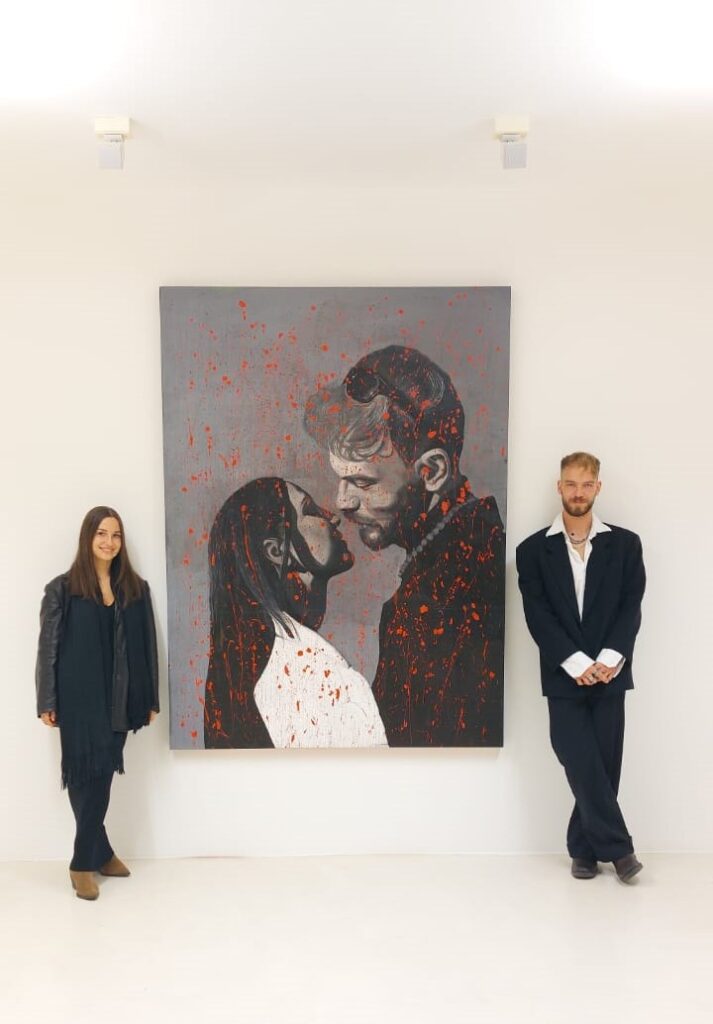
Barariu Daniel Marian Sartini (nato in Romania nel 1999) è un artista visivo contemporaneo. Nel 2003, all’età di quattro anni fu adottato da una coppia italiana e si trasferì nelle Marche, dove tutt’ora risiede. Il suo talento naturale e la sua grande passione per l’arte lo hanno portato a intraprendere un percorso di studi artistici: dapprima il liceo artistico “A. Apolloni” di Fano e poi l’Accademia di Belle Arti di Urbino. L’artista trae ispirazione attraverso i propri sogni, tormenti e da una storia personale che ritorna sempre in chiave malinconica, ma anche dai suoi studi scientifici, storici e filosofici. Le sue opere affrontano molteplici tematiche, che vanno dall’infanzia alla nostalgia per un mondo rurale e semplice, dal quale l’adozione lo ha separato, generando una frattura esistenziale che traspare nelle sue creazioni. Anche la fragilità della condizione umana, spesso rappresentata in modo sarcastico e dissacrante, carica di elementi simbolici e interpretazioni personali. Alcuni momenti storici entrano a loro volta nelle tele, reinterpretati attraverso simboli e allegorie che sfidano il presente. Durante la sua produzione giovanile, Sartini si è dedicato soprattutto alla ritrattistica, genere che ha rivisitato in modo originale, passando dall’uso del carboncino ai colori a olio. Nei suoi grandi ritratti, la figura umana non è una semplice replica ma un’interpretazione, talvolta caricaturale, che enfatizza aspetti distintivi della personalità dei soggetti rappresentati. Spesso, l’autore diventa protagonista dei propri quadri, catturato nella sua essenza e in relazione con un mondo esterno di cui coglie problematiche e dissonanze, concependo l’arte non solo come espressione estetica, ma anche come strumento pragmatico e incisivo verso la società contemporanea.

Daniel Marian Barariu Sartini was born on July 22, 1999, in Adâncata, a small rural village in Romania. In 2003, at the age of four, he was adopted by an Italian couple and moved to Fano, in the Marche region, where he continues to live. His innate talent and deep passion for art inspired him to pursue a formal education in the field, first at the “A. Apolloni” art high school and then at the Academy of Fine Arts in Urbino. His work addresses multiple themes, including reflections on childhood and a longing for the simple, rural world from which his adoption distanced him, resulting in an existential divide that resonates throughout his creations. The fragility of the human experience is another recurring theme in his work, often expressed with sarcasm and irreverence, and filled with symbolic elements and personal interpretations. He also incorporates historical moments into his paintings, reinterpreted through symbols and allegories that challenge contemporary society. During his early artistic career, Sartini focused on portraiture, revisiting the genre in an original way by evolving from charcoal to oil paints. In his large-scale portraits, the human figure becomes more than a mere representation; it transforms into an interpretation sometimes caricatured that highlights distinctive aspects of the subjects’ personalities. Often, the artist himself appears as a central figure in his works, captured in his essence and in dialogue with an external world that he observes with a keen awareness of its challenges and dissonances. For Sartini, art is not just an aesthetic pursuit but a pragmatic and incisive tool for engaging with contemporary issues.

Daniel Marian Barariu Sartini est né le 22 juillet 1999 à Adâncata, un petit village rural de Roumanie. En 2003, à l’âge de quatre ans, il est adopté par un couple italien et s’installe à Fano, dans la région des Marches, où il réside encore aujourd’hui. Son talent inné et sa passion profonde pour l’art l’ont conduit à suivre une formation artistique, d’abord au lycée artistique “A. Apolloni”, puis à l’Académie des Beaux-Arts d’Urbino. Ses œuvres abordent de multiples thématiques, notamment des réflexions sur l’enfance et une nostalgie pour un monde rural simple dont son adoption l’a éloigné, créant une fracture existentielle qui résonne dans ses créations. La fragilité de l’expérience humaine est un autre thème récurrent dans son travail, souvent exprimé avec sarcasme et irrévérence, chargé d’éléments symboliques et d’interprétations personnelles. Il intègre également des moments historiques dans ses peintures, réinterprétés à travers des symboles et des allégories qui remettent en question la société contemporaine. Au début de sa carrière artistique, Sartini s’est concentré sur la portraiture, revisitant ce genre de manière originale, évoluant de l’utilisation du fusain à celle des peintures à l’huile. Dans ses grands portraits, la figure humaine devient plus qu’une simple représentation : elle se transforme en une interprétation parfois caricaturale qui met en lumière des aspects distinctifs des personnalités des sujets. Souvent, l’artiste lui-même apparaît comme une figure centrale dans ses œuvres, capturé dans son essence et en dialogue avec un monde extérieur dont il perçoit les défis et les dissonances. Pour Sartini, l’art n’est pas seulement une quête esthétique, mais un outil pragmatique et incisif pour s’engager avec les enjeux contemporains.